
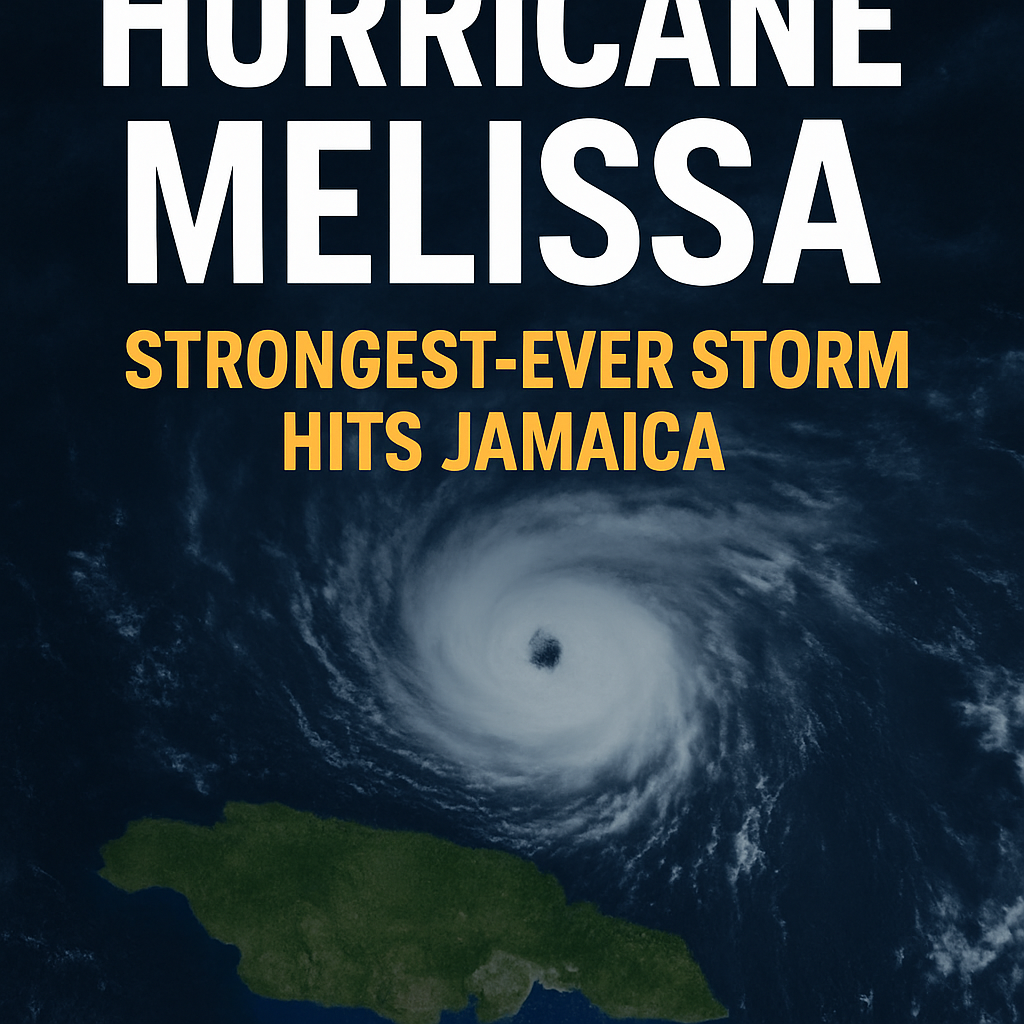
On October 28, 2025, Hurricane Melissa made landfall near New Hope in Westmoreland, Jamaica, with devastating force. With wind gusts later confirmed at 252 miles per hour, the storm now stands as the strongest hurricane ever recorded to strike Jamaica (UCAR Center for Science Education, 2025). Melissa’s impact was immediate and widespread—flooding communities, destroying homes, and collapsing infrastructure across several western parishes.
But beyond the physical destruction, Melissa has revealed deeper truths about Jamaica’s vulnerabilities and opportunities. This article examines the cultural, economic, and technological implications of the storm — with support from local Jamaican reporting and global agencies.
Table of Contents
ToggleWhat Happened: The Facts
As Melissa crossed Jamaica, parishes such as Westmoreland, St. Elizabeth, St. James, and Hanover experienced catastrophic damage (Reuters, 2025a). Photos and assessments showed uprooted buildings, flooded town squares, and long stretches of darkened communities (Reuters, 2025b).
Economic Damage
Insured losses were estimated between US $2.2 billion and $4.2 billion (Reuters, 2025c). The total economic impact, according to the Prime Minister, amounted to roughly 30% of Jamaica’s GDP (Reuters, 2025d). This places Melissa among the most economically damaging natural disasters in Caribbean history.
Environmental Damage
The United Nations Development Programme (2025) reported that Melissa generated over 4.8 million tonnes of debris, crippling recovery efforts.
Impact on Children
Nearly 477,000 Caribbean children, including Jamaicans, had their schooling disrupted due to infrastructure breakdowns (UNICEF, 2025).
Culture & Social Impact
Jamaicans have long embodied resilience, and this cultural strength was evident in Melissa’s aftermath. Communities across St. Elizabeth and Westmoreland banded together to clean roads, share resources, and support displaced families. This collaborative spirit, embedded in Jamaican cultural identity, became a lifeline in the days following landfall.
However, Melissa exposed longstanding inequalities across the island. Rural communities with older housing stock and weaker infrastructure experienced the longest outages and the slowest recovery. Cultural and historical sites important to tourism and local identity also suffered considerable damage (Reuters, 2025a).
As the Jamaica Observer (2025) noted, Melissa’s aftermath underscored the need for community-driven rebuilding strategies that blend cultural resilience with modern planning.
Tourism
Tourism—one of Jamaica’s most vital industries—was severely impacted. Infrastructure damage across resort regions led to canceled bookings, shuttered attractions, and displaced tourism workers.
According to Bartlett (2025), the Ministry of Tourism set an ambitious goal of a full restart by December 15, 2025, with a task force assembled to fast-track restoration (The Gleaner, 2025a). The Jamaica Information Service (2025a) also reported that tourism stakeholders had begun implementing enhanced safety protocols even before Melissa struck.
Small Businesses
Small and micro-enterprises — from shopkeepers to taxi operators — faced immediate losses. Many experienced weeks of downtime due to power outages, damaged facilities, and shifting consumer priorities.
The Gleaner (2025b) highlighted strategies for small businesses to rebound, including digital transformation, financial planning, and disaster insurance. Further relief came through temporary measures such as the National Water Commission’s debt amnesty programme to help business operators recover (The Gleaner, 2025c).
Family-owned businesses were particularly vulnerable. As Nicholson (2025) explained, Jamaican family businesses lack diversification and formal disaster-response structures, leaving them exposed to long-term financial strain.
Technology, Innovation, and Jamaica’s Digital Future
Hurricane Melissa exposed significant gaps in Jamaica’s technology infrastructure, while also revealing opportunities for modernization.
Infrastructure Failures
- Widespread collapse of above-ground electricity poles
- Cellular and internet outages lasting days
- Limited communication from deep-rural communities
Opportunities for Innovation
Blake (2025) argued that Jamaica must prioritize climate-resilient infrastructure, such as:
- Underground power distribution systems
- Solar-powered micro-grids and battery storage
- Nationwide expansion of reliable broadband
- AI-driven climate monitoring
What This Means for Jamaicans
Hurricane Melissa is more than a natural disaster; it is a national turning point — with broad implications for how Jamaicans work, create, live, and prepare for the future.
For Jamaican Creators
- Cloud-based storage and editing tools
- Portable power stations and solar chargers
- Rugged, weather-proof equipment
- Proper insurance for devices and home studios
For Business Owners
Businesses must build climate resilience into their operations. This includes:
- Off-grid or hybrid power systems
- Digital payment systems that operate offline
- Cloud-backed point-of-sale solutions
- Formal disaster plans and insurance coverage
For Jamaican Households
Families must rethink preparedness:
- Food and water reserves
- Backup lighting
- Diesel or solar generators
- Emergency communications systems
For the Jamaican Government
Melissa highlighted areas requiring urgent policy intervention:
- Investment in climate-resilient infrastructure
- Expansion of affordable renewable energy
- National digital transformation
- Disaster insurance and social protections for vulnerable families
Conclusion
Hurricane Melissa delivered a blow unlike any Jamaica has faced in modern times. Yet it also offers a rare opportunity — to rebuild smarter, stronger, and more equitably. By embracing innovation, strengthening community networks, prioritizing resilience, and learning from the storm, Jamaica can transform Melissa from a tragedy into a catalyst for national renewal.
References
Bartlett, E. (2025, October 30). Bartlett targets full tourism restart by December 15, 2025. The Jamaica Observer. https://www.jamaicaobserver.com/2025/10/30/melissaaftermath-bartlett-targets-full-tourism-restart-december-15-2025/
Blake, O. (2025, November 21). Cauterising the adverse economic impacts of Hurricane Melissa. The Gleaner. https://jamaica-gleaner.com/article/commentary/20251121/ohene-blake-cauterising-adverse-economic-impacts-hurricane-melissa
Jamaica Information Service. (2025a, October 24). Tourism stakeholders reinforce safety as Tropical Storm Melissa approaches. https://jis.gov.jm/tourism-stakeholders-reinforce-safety-as-tropical-storm-melissa-approaches/
Jamaica Information Service. (2025b, November 8). Preliminary assessments reveal J$29.5B in agricultural damage from Hurricane Melissa. https://jis.gov.jm/preliminary-assessments-reveal-29-5b-in-agricultural-damage-from-hurricane-melissa/
Jamaica Observer. (2025, November 16). Rebuilding together: A collaborative path to Jamaica’s recovery after Hurricane Melissa. https://www.jamaicaobserver.com/2025/11/16/rebuilding-together/
Nicholson, L. (2025, November 19). Family business exposure to natural disasters. The Gleaner. https://jamaica-gleaner.com/article/business/20251119/lawrence-nicholson-family-business-exposure-natural-disasters
Reuters. (2025a, October 27). Hurricane Melissa begins lashing Jamaica as “catastrophic” Category 5 storm. https://www.reuters.com/business/environment/hurricane-melissa-begins-lashing-jamaica-catastrophic-category-5-storm-2025-10-27/
Reuters. (2025b, November 3). In Jamaica, a trail of hurricane destruction leaves entire communities decimated. https://www.reuters.com/pictures/jamaica-trail-hurricane-destruction-leaves-entire-communities-decimated-2025-11-03/
Reuters. (2025c, November 3). Insured losses from Hurricane Melissa estimated at up to $4.2 billion, says Verisk. https://www.reuters.com/business/environment/insured-losses-hurricane-melissa-estimated-up-42-billion-says-verisk-2025-11-03/
Reuters. (2025d, November 4). Hurricane Melissa cost Jamaica around 30% of GDP, PM estimates. https://www.reuters.com/world/americas/hurricane-melissa-cost-jamaica-around-30-gdp-pm-estimates-2025-11-04/
The Gleaner. (2025a, October 30). Bartlett announces tourism recovery task force after Hurricane Melissa. https://jamaica-gleaner.com/article/news/20251030/bartlett-announces-tourism-recovery-task-force-after-hurricane-melissa
The Gleaner. (2025b, November 18). Growth & Jobs | How small businesses can rebound after Hurricane Melissa. https://jamaica-gleaner.com/article/news/20251118/growth-jobs-how-small-businesses-can-rebound-after-hurricane-melissa
The Gleaner. (2025c, November 20). NWC extends debt amnesty programme for small business operators amid Hurricane Melissa. https://jamaica-gleaner.com/article/news/20251120/nwc-extends-debt-amnesty-programme-small-business-operators-amid-hurricane
UCAR Center for Science Education. (2025, November 6). Record-breaking winds confirmed for Hurricane Melissa. https://news.ucar.edu/133047/record-breaking-winds-confirmed-hurricane-melissa
UNICEF. (2025, November 7). Hurricane Melissa disrupts schooling for nearly 477,000 children across the Caribbean. https://www.unicef.org/press-releases/hurricane-melissa-disrupts-schooling-nearly-477000-children-across-caribbean
United Nations Development Programme. (2025, November 10). More than 4.8 million tonnes of debris left by Hurricane Melissa across western Jamaica. https://www.undp.org/press-releases/more-48-million-tonnes-debris-left-hurricane-melissa-across-western-jamaica-according-un-development-programme-analysis